

 Facebook
 X
X
 Pinterest
 Copy Link
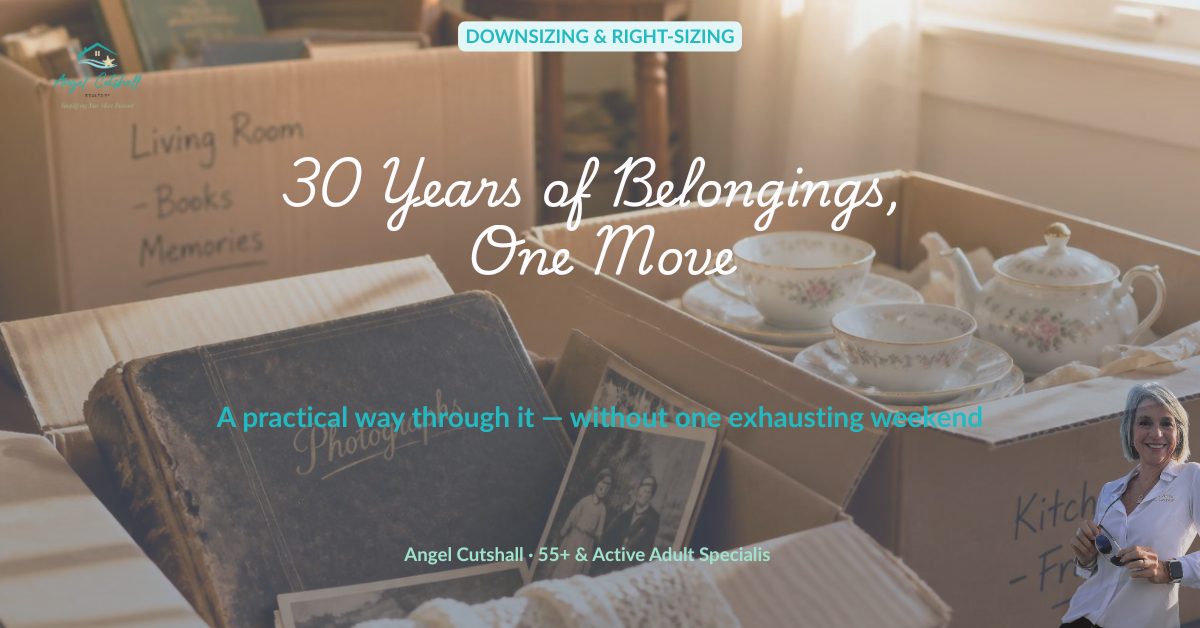
If you’ve lived in the same home for decades, “just declutter before you sell” might be the single most unhelpful piece of advice anyone’s ever given you. Thirty years doesn’t produce clutter — it produces a life. Kids’ report cards, a parent’s china, furniture that’s outlived three sofas’ worth of trends. Where do you even start?
Here’s what actually works, based on watching a lot of families go through exactly this.
Why This Feels Harder Than People Expect
Downsizing advice usually treats belongings like a logistics problem — bins, labels, donation runs. But the real slowdown isn’t logistical. It’s that every box holds a decision, and after thirty years, there are a lot of boxes. Decision fatigue is real, and it’s the actual reason this process takes longer than anyone plans for.
Knowing that going in helps. This isn’t you being slow or disorganized — it’s just what this particular task requires.
Start With Four Piles, Not One Big Sort
Instead of trying to decide “keep or toss” for every single item, most people do better sorting into four categories:
- Coming with me — daily-use items and the handful of things that matter most
- Going to family — pieces someone specific has already asked about, or clearly should have
- Donate or sell — good condition, no sentimental pull, someone else can use it
- Not sure yet — anything you can’t decide on today
That fourth pile is the most important one. It gives you permission to not decide everything at once — which is usually what gets people unstuck.
What to Do With the “Not Sure” Pile
Give it a deadline, not a decision. Box it, date it, and revisit it in 30 days. Almost everyone finds that time does most of the sorting for them — items that felt impossible to part with in week one often feel much easier by week four, once the initial emotional weight has settled.
For anything tied to a specific memory rather than daily use — a family photo album, a child’s artwork, a set of dishes — consider photographing it before deciding. Sometimes the photo captures what actually mattered, and the object itself becomes easier to let go of.
A Few Practical Realities Worth Knowing Early
- Measure before you move, not after. Bring exact room dimensions from your new place before you decide what furniture makes the cut — a beloved sofa that doesn’t fit is a hard surprise on moving day.
- Digitize what you can. Photos, documents, and slides take up far less room as files than as boxes, and they’re easier to actually enjoy afterward.
- Ask family before you assume. A piece you think no one wants might be exactly what a grandchild has been hoping for — and vice versa.
If you want more structured tools for this process, the National Association of Senior & Specialty Move Managers offers excellent free guides for exactly this kind of sort.
You Don’t Have to Do This in One Weekend
The biggest mistake I see is families trying to clear thirty years in a single exhausting push. It doesn’t have to happen that way. Spreading it over a few weekends, with breaks in between, almost always leads to better decisions — and a lot less regret.
If you’re wondering what a settled, established 55+ community can look like on the other side of all this sorting, I wrote about one client favorite, Sweetwater by Del Webb.
If you’re starting to think about what this process could look like for your own home, I’m glad to talk through it with you — no pressure, just a conversation about what’s ahead.
📞 904-237-6390 📧 angel.jaxhomes@gmail.com 📅 Schedule a conversation: https://calendar.app.google/HyFvoiKWEJGp2LDx9


